Sebago Lake Region February Ice Fishing Report: Best Ice in Six Years and How to Use It
Tactical Takeaway: Sebago Lake has the best ice it's seen in six years, and togue are down there — they're just being selective. Jigging with sonar in 70+ feet is the play. If the deep-water bite frustrates you, pivot to late-season browns, rainbows, or panfish on the region's smaller waters. March ice can be outstanding fishing, but the shoreline is already lying to you about how safe it is.
Sebago Lake Has Real Ice for the First Time in Six Years — Are You Using It Right?
Let's get the headline out of the way: Sebago Lake has solid, fishable ice, and it set up well by early February. We haven't seen ice like this on the big lake in roughly six years. December through mid-February delivered a sustained, bone-deep cold that locked up waters across the region — including plenty of ponds and lakes that are normally borderline at best.
That's the good news. Here's the catch.
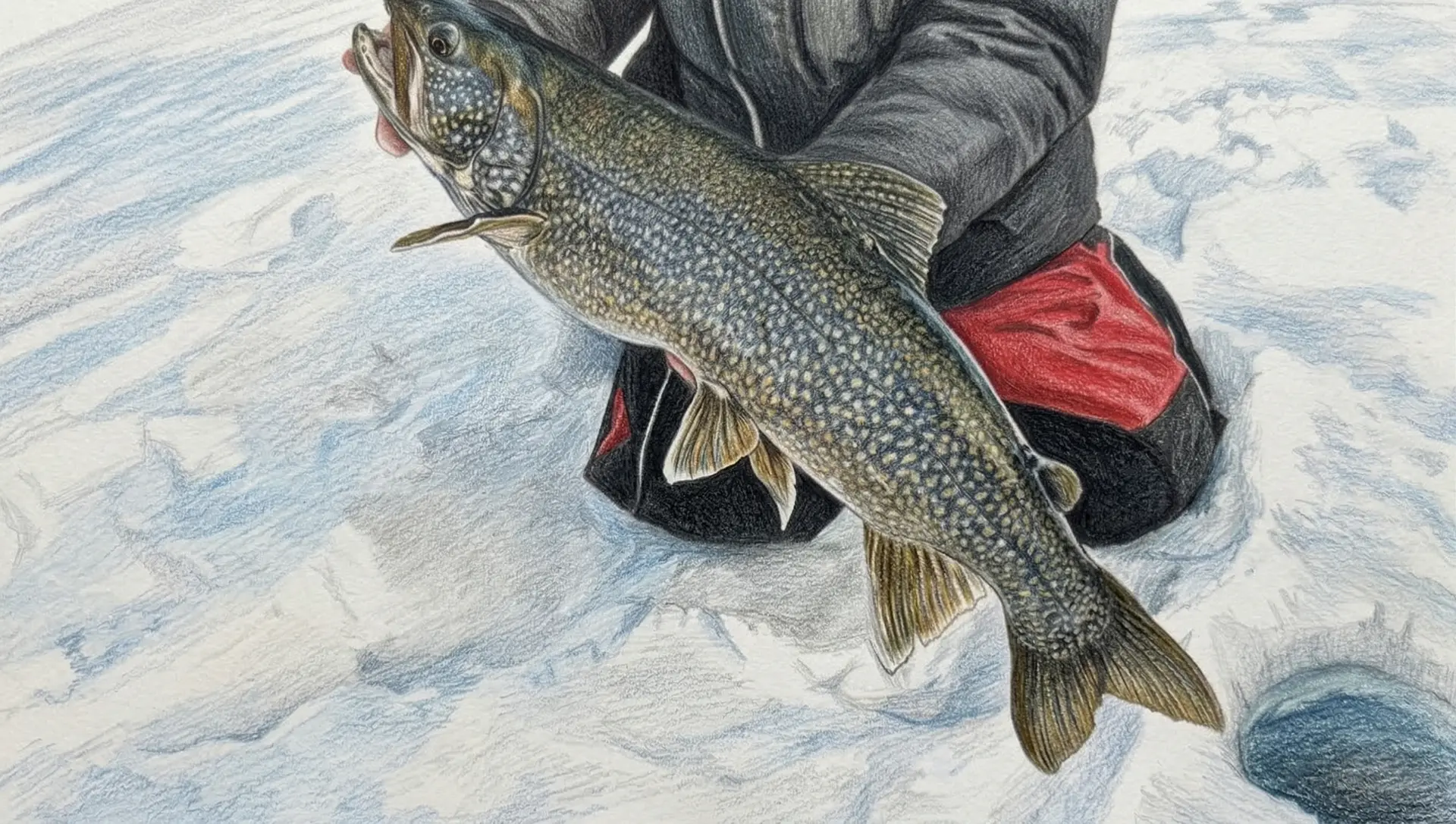
The togue (Salvelinus namaycush) know you're there, and they don't care about your new jig. Anglers across Sebago are reporting the same maddening story: fish finders lit up with activity, marks stacking at depth, fish rising to investigate — and then turning away like they just remembered a prior engagement. Lots of looks. Few commitments.
This is not a fishless lake. This is a lake full of educated fish.
Why Are Sebago Lake Togue So Finicky Right Now?
The anglers who are connecting — and a few have reported catches of 20 to 30 fish — share a common approach: they're jigging with sonar in water 70 feet or deeper. That's the productive zone. If you're parked in 40 feet wondering why your tip-ups haven't twitched in three hours, the answer is 30 feet below you.
Here's what's working:
- Depth matters more than lure choice. Get below 70 feet before you start experimenting with presentations. The fish are holding deep, and the ones willing to commit are down there.
- Sonar is not optional. You need to watch the fish react to your jig in real time. When a togue rises 10 feet toward your lure and stalls, that's your cue to change cadence — kill the action entirely, or switch to a subtle flutter. Blind jigging at these depths is just arm exercise.
- Downsize and slow down. When fish are looking but not eating, the instinct is to jig harder. Do the opposite. A slow, dying fall with a dead pause at the bottom converts more finicky lakers than an aggressive rip ever will. These fish didn't get big by being impulsive.
If Sebago's deep-water chess match isn't your speed, Thompson Lake, Mousam Lake, and Great East Lake are all producing lake trout right now with good ice and more cooperative fish.
What Species Still Bite Late in Maine's Ice Fishing Season?
Brown Trout (Salmo trutta) and Rainbow Trout (Oncorhynchus mykiss) are more resistant to late-winter angling pressure than most coldwater species. While togue get lockjaw and salmon go dormant, browns and rainbows persist right through to the end of hard-water season. They're the closer on your roster — the fish that show up when everything else checks out.
Best Bets for Brown Trout
- Square Pond (Acton)
- Stearns Pond (Sweden)
- Hancock Pond (Denmark)
- Range Ponds (Poland)
- Sabbathday Lake (New Gloucester)
Best Bets for Rainbow Trout
- Kennebunk Pond (Kennebunk)
- Stanley Pond (Hiram)
- Range Ponds (Poland)
- Worthley Pond (Peru)
All four are consistent producers year after year.
The rainbow playbook is simple: jig the weed beds, or set up with worms, salmon eggs, or PowerBait just off bottom in water 10 feet or less. Rainbows in late winter cruise shallow structure. A bait sitting 6 inches off the substrate in a weedy flat is about as close to a guaranteed take as ice fishing gets. For more setups and presentations, check out our fishing tips and tactics.
What's the Best Species to Get Kids Into Ice Fishing?
March does something to warmwater fish. As photoperiod increases — even by just minutes per day — bass, perch, pickerel, and panfish start moving with a purpose they didn't have in January. The biological trigger isn't temperature. It's light. And that means the bite window widens right when the weather gets tolerable enough to bring a kid along.
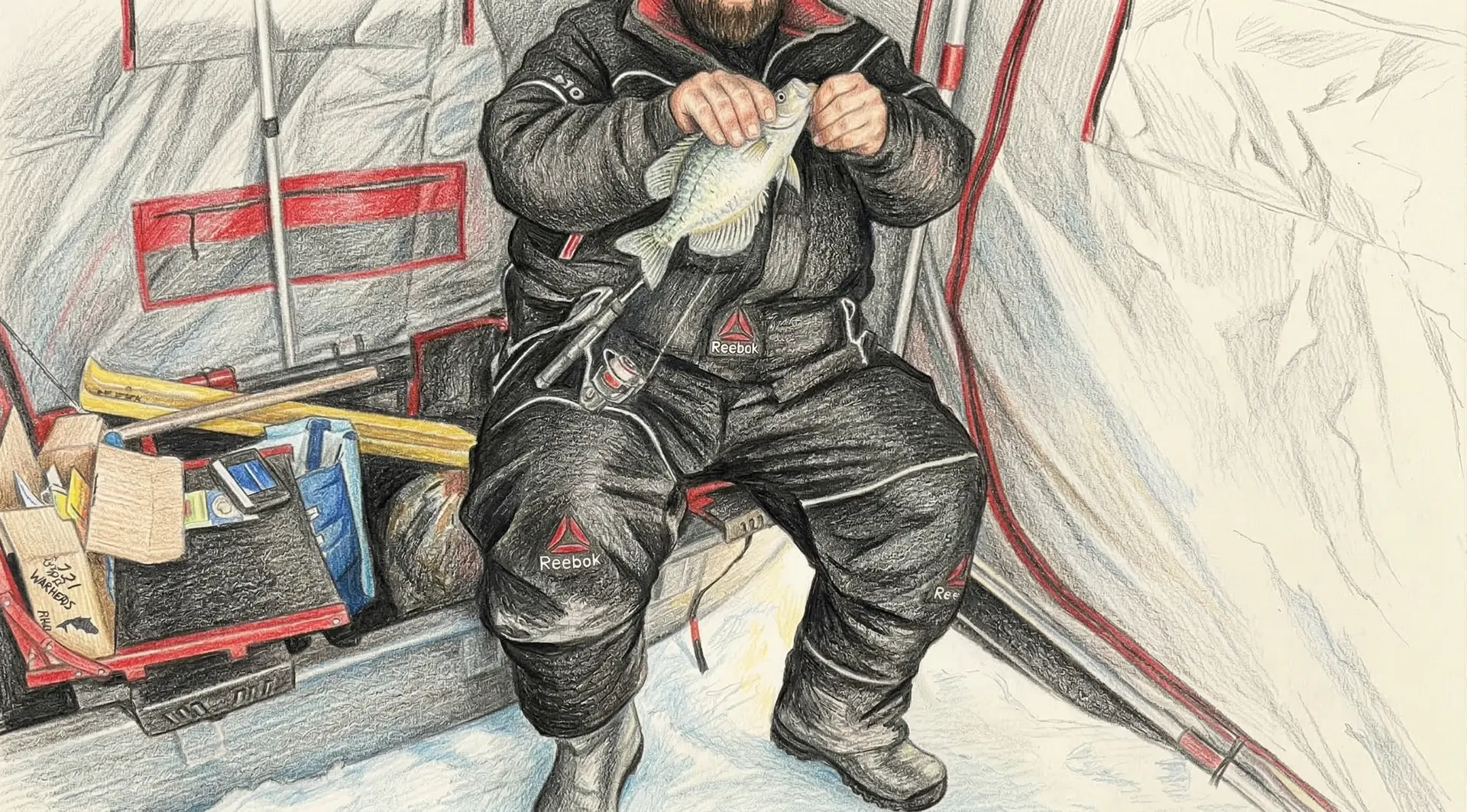
If you want to introduce a young angler to ice fishing, this is the month and these are the species. Forget starting them on togue in 80 feet of water, staring at a sonar screen while nothing happens. Put them over a weedy cove on a pond with good panfish numbers, drop a small jig tipped with a waxworm, and let them feel a fish pull back. Fast action keeps kids engaged. Slow, technical deep-water fishing loses them in 20 minutes.
Productive Warmwater Lakes
- Little Sebago Lake (Windham)
- Tripp Pond (Poland)
- Pennesseewassee Lake (Norway)
- Little Ossipee Lake (Waterboro)
- Round Pond (Greenwood)
Target weedy coves and bays on any of these waters. The vegetation concentrates baitfish, which concentrates everything else. Find the weeds, find the fish.
Why Does Switching It Up Catch More Fish Than the "Perfect" Setup?
There's no shortage of tips, tricks, or lures being sold as silver bullets. But here's the part nobody selling you tackle will say out loud: the only way to learn what works is to burn through what doesn't.
Swap your jig color. Move 50 yards. Try a pond you've never punched a hole in. Target a species you've ignored all winter. The anglers who consistently catch fish aren't running better gear — they've just failed more efficiently than you have. Every dead hole and refused presentation is data, and data beats lore every time.
Pattern recognition built on the ice is worth more than any forum thread or gear review. The lake is the classroom. Show up, take notes, and stop expecting a shortcut that doesn't involve getting cold.
What Happened at the 25th Sebago Lake Rotary Derby?
The 25th Annual Sebago Lake Rotary Derby just wrapped up, and the results confirm what we already know: the fish are in this lake. You just have to outwork them.
Adam Hamilton of Derry, NH took first place in the lake trout category with a 38.75-inch togue weighing 17.45 lbs — a legitimate trophy fish through the ice. A full list of winners is available on the organization's Facebook page.
What makes this derby worth highlighting goes beyond the leaderboard:
- The event partners with the Maine Department of Inland Fisheries and Wildlife (MDIFW) to encourage lake trout harvest. Why? Unchecked togue numbers suppress landlocked salmon (Salmo salar sebago) recruitment. Targeted harvest during derby season is genuine fisheries management — not just competition.
- Any unwanted lake trout go to Nova Seafoods for processing and distribution to those in need.
- Funds raised are donated to local charities and nonprofit groups.
A tournament that feeds people, supports conservation, and raises money for the community. Hard to argue with that model.
How Dangerous Is March Ice on Sebago Lake?
March ice is deceptive, and it kills people who trust their memory instead of their auger. The shoreline areas that had the thickest, most trustworthy ice in December and January may now be the thinnest and most dangerous. As air temperatures climb and the sun angle steepens, the shore absorbs and radiates heat. That thermal energy works from the edges inward, undermining ice that looked bomber two weeks ago.
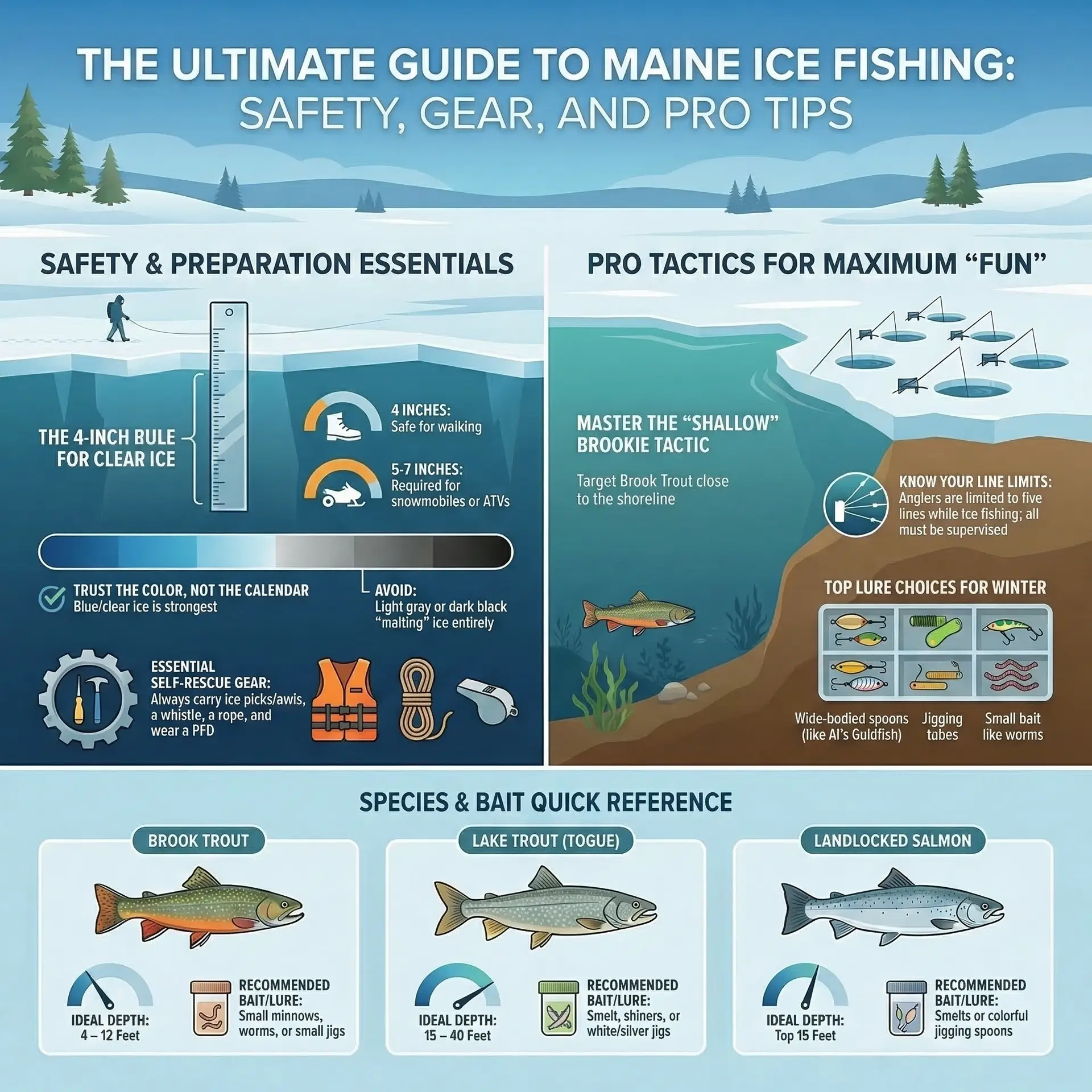
High-risk areas to watch in March:
- Causeways and narrows — current flow beneath these structures accelerates ice erosion, and spring rain events can open them up overnight
- Inlets and outlets — anywhere flowing water meets the lake, the ice is compromised first
- Shallow bars and points — these features absorb solar radiation and thin from below
- Large boulders — rocks protruding above or sitting just below the surface act as heat sinks, creating weak spots in a radius around them
- Spring rain and thaw cycles — a warm rain event followed by a refreeze creates a deceptive crust over rotten ice. Don't trust yesterday's conditions.
Check ice thickness every time you go out. Spud bar or auger, no exceptions. If you're driving on, check frequently and stay well away from the edges. The middle of the lake may still have 18 inches of solid ice while the shoreline has 3 inches of honeycomb. The ice doesn't care that you walked on it fine last weekend.
If the weather cooperates, anglers may get to fish the entire month of March. But don't let enthusiasm override judgment. The lake will still be there tomorrow.
Book a Guided Trip on Sebago Lake
Whether you're chasing togue through the ice or gearing up for the open-water season ahead, we know these waters inside and out. We run trips on Sebago Lake and across the region targeting landlocked salmon and lake trout.
Call (207) 321-9899 or visit SebagoLakeGuide.com to book your trip. Ice-out is coming — get on the water while you still can.
Read our latest fishing reports to stay dialed in on what's biting.
Keep Reading
- arrow_forwardMore fishing tips and tactics
- arrow_forwardLatest fishing reports
Never miss a catch!
Explore fishing reports and practical tips from Sebago Lake and across Maine.