Moosehead Region February Ice Fishing Report: Allagash Brook Trout, Chesuncook Salmon, and Why Maine's Fisheries Managers Want You to Keep More Fish
Tactical Takeaway: The waters above Moosehead are producing excellent ice fishing right now — Allagash brook trout, Chesuncook salmon in peak condition, and Lobster Lake togue in the 18–25-inch range. But the real story this March is harvest: Maine biologists are actively asking anglers to keep specific size classes of fish from these waters, and the anglers who comply are helping build the fisheries that will be exceptional a decade from now. Know your regulations before you go, and bring a cooler.
The Anglers Who Release Everything This March Are Making a Mistake
Most fishing culture defaults to catch and release. Release everything, take no fish, leave no trace — a reflex that serves anglers well in most situations. On the waters above Moosehead this late winter, it's working against the fishery.
Maine's Department of Inland Fisheries and Wildlife doesn't hand out slot limits and harvest encouragements because they ran out of ideas. They issue them because the biology demands it. When a lake trout population skews toward a specific size class, the fish that aren't being removed suppress the growth and recruitment of younger, healthier fish. Removing the right size class at the right moment is fisheries management — not wanton harvest.
This March, on multiple major northern Maine waters, MDIFW needs anglers to bring fish home. The regulations are already written to facilitate it. The only thing missing is anglers willing to use them.
Here's what's happening — and what you should put in your cooler.
What's Biting at Allagash Lake Right Now?
Allagash Lake is one of the most remote fisheries in the eastern United States — no motor access, no road to the shore, nothing but carry-in effort and a watershed held in near-wilderness condition for generations. What you get in return: a fishery that produces when you show up ready to work for it.
Right now, it's producing.
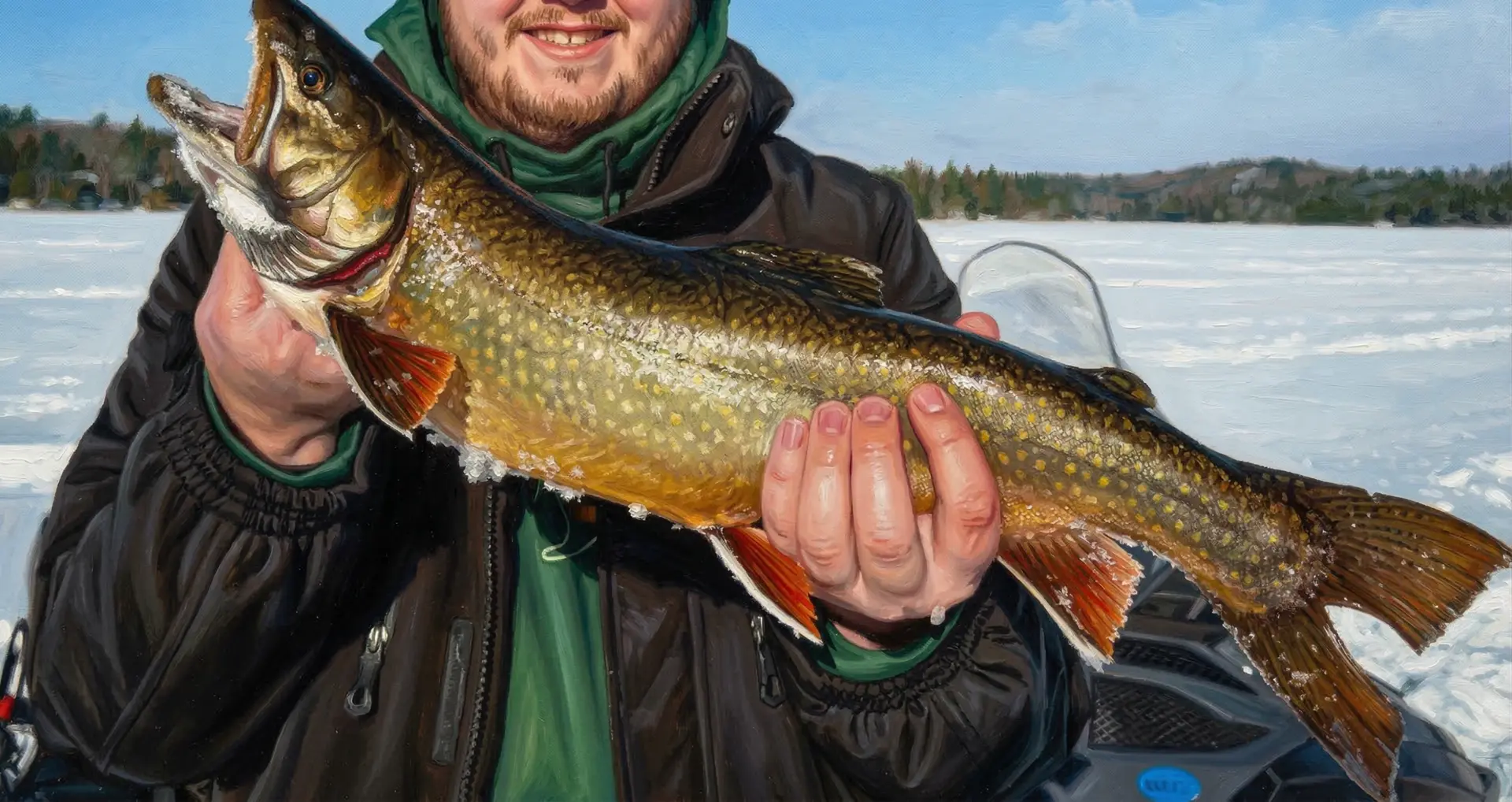
Both Brook Trout (Salvelinus fontinalis) and Lake Trout (Salvelinus namaycush) are active and biting. These fish don't see heavy pressure — a direct function of how hard the water is to reach — and unpressured fish are cooperative fish.
The harvest picture: Keep lake trout from Allagash at 2 fish, minimum 18-inch length. That's not a generous limit — it's a targeted one. Fish over 18 inches are the exact size class suppressing the next generation's growth. If you pull one over 18 inches, keep it.
Brook trout at Allagash are a different story. This population includes wild fish representing one of the last truly wild brook trout strains in the Northeast. Fish intelligently — but a limit of fat, healthy wild brookies is a reasonable harvest from a water this productive.
How Good Is the Salmon Fishing at Chesuncook Lake?
Chesuncook Lake — Maine's third-largest lake at roughly 23,000 acres — has been producing Landlocked Salmon (Salmo salar sebago) reports worth paying attention to, not just for the fish counts, but for what the fish look like.
The salmon coming through this winter are in very good shape. That's not an angler's optimism — it's a biological indicator. Salmon condition factor reflects forage base quality and overall population health. Fat, firm salmon in late winter mean the lake is feeding them well.
The working hypothesis from the fisheries side: MDIFW's liberalized bag limit on Chesuncook salmon is having a measurable positive impact. When harvest pressure is applied to a robust, over-abundant population of smaller fish, the remaining fish have more forage available. The salmon coming off the ice this winter — heavy, well-conditioned fish — are the downstream result of that management decision.
The harvest ask: Chesuncook needs anglers to take salmon under 16 inches. These fish are abundant, competing hard for forage, and removing them gives the larger fish more resources to keep growing. Take home as many as your cooler will hold. The regulations are calibrated to support this harvest. Know your numbers before you go.
What Size Togue Are Anglers Catching at Lobster Lake?
Lobster Lake is delivering specific intel: lake trout consistently in the 18–25-inch range. Not random mixed sizes — a concentrated slot of fish feeding actively under the ice.
There are also reports of salmon in lean condition — what the old-timers call "skinny salmon." A lean salmon in late winter isn't necessarily a sick fish. It may reflect competitive pressure: too many fish of the same size class competing for limited forage. Note it before assuming Lobster's salmon fishing matches its togue bite.
Critical regulation note: Lobster Lake is now open to ice fishing through April. This extended season is a specific management decision that gives anglers more time on a water that produces late into hard-water season. Use it.
The harvest ask: Keep lake trout from Lobster in the 18–23-inch slot, 2 fish. Same logic as Allagash — these are the fish the biologists need removed to maintain healthy size structure.
How Many Togue Should You Keep at Moosehead Lake?
Moosehead Lake, Maine's largest, carries a different and more aggressive harvest recommendation: 5 lake trout under 18 inches. High limit, small fish — and it's deliberate.
Sub-18-inch togue in Moosehead compete intensely for the forage the larger fish need to keep growing. The population is healthy enough that significant harvest of this size class has no negative impact. It has a positive one.
If you're on Moosehead and pulling small togue, don't put them back. That's not conservation — not on this water, not with these regulations in place. Stack them in the cooler. The fishery will be better for it.
Why Is March the Best Month to Catch Cusk?
Here's the late-winter bonus most anglers overlook entirely.
Cusk — burbot (Lota lota) to the field guide, "the ugliest fish in Maine" to everyone who's actually landed one — are in full spawning mode right now. They're the only freshwater fish in Maine that spawns under the ice in winter. That biological fact is the key to finding them.
Spawning concentrations stage on predictable structure: sandy or gravelly shorelines, rocky shoals, and rough-bottomed substrate in less than 25 feet. A cusk looking for a mate is actively moving, feeding aggressively, and findable in locations that aren't their typical mid-lake haunts.
The tactical sequence for a productive March day:
- Work the daylight hours on Allagash, Lobster, or Chesuncook for togue and salmon — harvest the recommended size classes, run your tip-ups efficiently, fish the main basin.
- At last light, shift tip-ups to rocky and gravelly zones in less than 25 feet.
- Bait with a large dead smelt, sucker strip, or cut bait. Cusk are bottom-oriented and not selective — they're looking for a meal, not a presentation.
- Leave the tip-ups overnight. Come back in the morning.
Cusk are nocturnal, and incidental catches during the last hour of light happen more in March than any other month. They're unusual, they're exceptional table fare — firm white flesh, closer to cod than anything else you'll pull through a hole — and they've earned a genuine following among northern Maine ice anglers. March is the window to check one off your list.
Is the Ice Still Good Above Moosehead in March?
The cold front that built January and February made for a legitimate Maine winter — real ice, solid conditions, good depth for March. The days are getting longer now. The sun angle is changing. On the right day — calm air, temperatures in the 20s, not a hint of wind — northern Maine anglers have a name for it: a bluebird t-shirt day. The kind of day that makes January feel like a different state entirely.
Those days are coming.
Check water-specific regulations before any of these trips. The harvest recommendations are tied to specific size classes that differ on every water. Know your numbers before you leave the truck.
Book a Guided Trip on Sebago Lake
When hard water turns to open water, Sebago Lake comes alive. We run guided trips targeting landlocked salmon and lake trout on Sebago with years of local knowledge behind every decision.
Call (207) 321-9899 or visit SebagoLakeGuide.com to book your spring trip. Ice-out on Sebago is one of the most productive windows of the year — and it goes fast.
Browse our Maine fishing tips and tactics or read our latest fishing reports for current conditions across the region.
Keep Reading
- arrow_forwardMaine fishing tips and tactics
- arrow_forwardLatest fishing reports
Never miss a catch!
Explore fishing reports and practical tips from Sebago Lake and across Maine.