Belgrade Lakes Region February Ice Fishing Report: Togue, Cusk, and the Best Fast-Action Waters in Central Maine
Tactical Takeaway: Central Maine's ice fishing window is still open — and if you know where to look, March delivers some of the season's best action. Sheepscot Pond is hiding near-black wild togue in 30–40 feet. Eight regional waters hold burbot that most anglers have never targeted. And bass are feeding aggressively before the spawn, which means the fish are cooperative and the fight is worth every cold minute.
Most Anglers Are Leaving Central Maine's Best March Fishing Untouched
While everyone else is arguing about whether the ice is still safe enough to fish, a small group of anglers is quietly working waters that produce right through the end of hard-water season. The mistake most people make in March? They either quit too early, or they keep grinding the same species they've been chasing all winter — and wonder why the bite has gone cold.
March in central Maine is a rotation game. The togue bite on deep, quality waters can be exceptional. Burbot — the only freshwater fish that spawns under the ice in winter — are at peak activity. The warmwater species are waking up. Bass don't know it's still technically winter.
Pick your water. Pick your species. Here's where to be.
What Makes Sheepscot Pond One of Central Maine's Most Underrated Ice Fisheries?
Sheepscot Pond in Palermo punches well above its size class. Low nutrient load, exceptional water clarity, and sufficient depth for coldwater species creates a fishery stack you won't find on most central Maine waters — and because it flies under the radar, the fish aren't pressured.
Sheepscot holds three distinct coldwater fisheries, which is unusual for a single interior pond:
- Brook Trout (Salvelinus fontinalis) — stocked fish from MDIFW augmented by natural holdovers. This winter the brookies have been producing consistent action.
- Wild Lake Trout (Salvelinus namaycush) — the headline. Sheepscot supports a self-sustaining wild togue population, uncommon in a pond of this size. Fish run small to medium but numbers are strong enough for fast action, with larger fish appearing periodically.
- Wild Landlocked Salmon (Salmo salar sebago) — a genuinely rare occurrence in this part of the state. The population is small, but wild salmon in an interior pond tells you everything you need to know about Sheepscot's water quality.
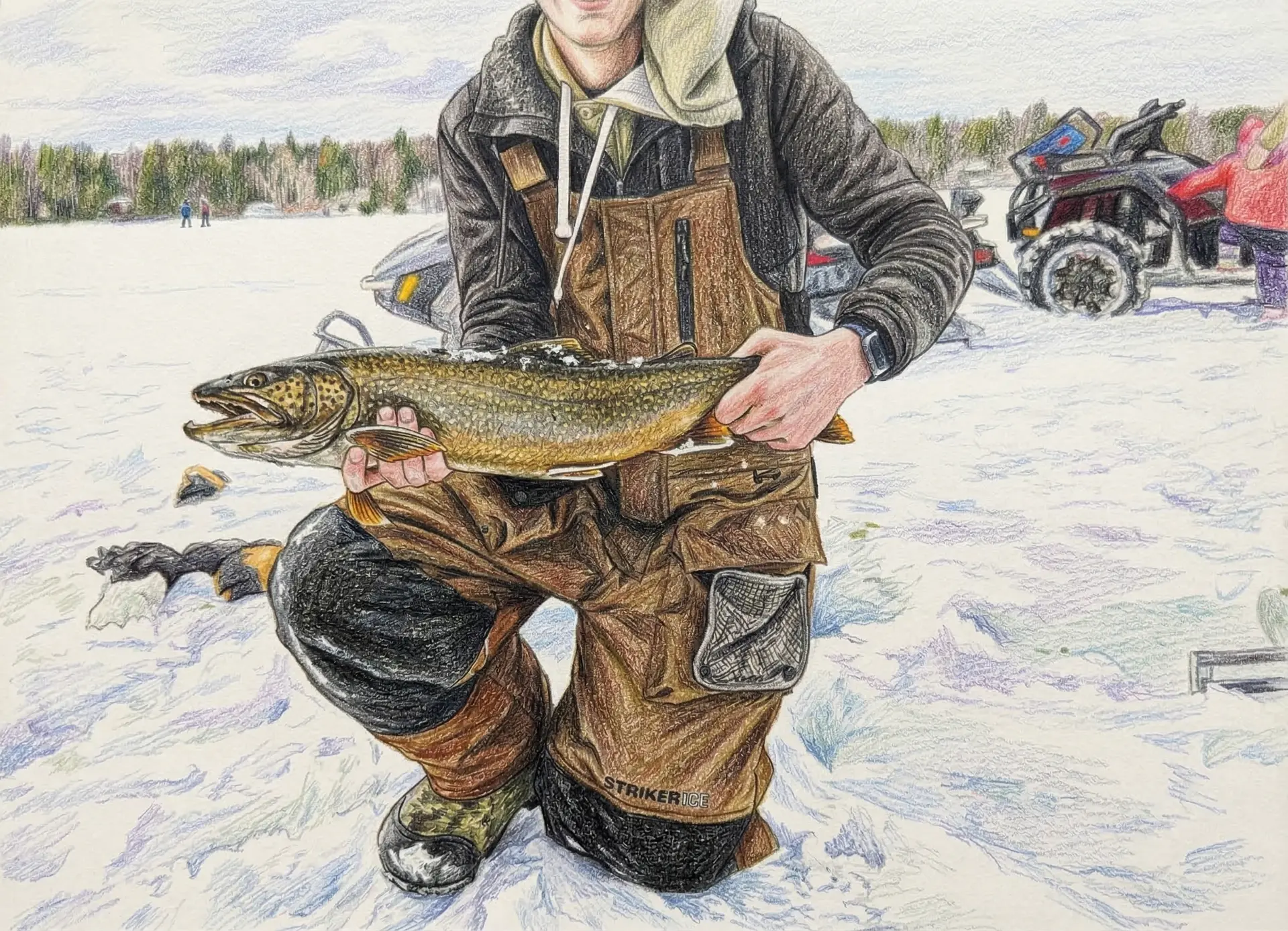
The togue here have a distinctive field characteristic: near-black coloration, significantly darker than the silver-and-cream fish you'd pull from Sebago. That pigmentation is tied to the water chemistry and substrate composition of their specific habitat. If you've never caught a black togue, Sheepscot is where to go.
Target depth: 30–40 feet. The fish range broadly across the pond, but this band is consistently productive. Drop a tungsten jig — 1/8 oz or lighter — and work it slowly. These aren't fish responding to flash or aggression. A subtle, dying presentation outfishes an aggressive rip here every time.
Where Can You Catch Burbot (Cusk) Through the Ice in Central Maine?
Burbot (Lota lota) is the only freshwater fish in Maine that spawns under the ice — which means late January through March is when they're most active, most aggressive, and most findable in shallow water. Most anglers have never targeted them deliberately. Their loss.
Cusk also happen to be exceptional table fare. The flesh is firm, white, and mild — closer to cod than anything else you'll pull through a hole this time of year. If you've never eaten one, you've been leaving the best part of winter on the table.
Central Maine cusk waters to know:
- Wassookeag Lake
- Parker Pond (Fayette)
- Flying Pond (Vienna)
- Woodbury Pond
- Sand Pond
- Echo Lake (Fayette)
- Minnehonk Lake
- Great Moose Lake (Harmony)
You won't catch a giant on most of these waters. You'll catch numbers — which is more useful when the goal is dinner.
Tackle: Cusk are bottom-oriented nocturnal feeders. A large smelt or sucker fillet on a hook, set on or just above the substrate on a tip-up, is the standard approach. They'll also hit large jigs worked slowly just off bottom after dark. If your tip-ups are dead all day and you can't figure out why, come back at sunset. The cusk will tell you what happened.
Which Central Maine Waters Offer the Fastest Ice Fishing Action Right Now?
Photoperiod — not temperature — is the primary biological trigger driving warmwater fish in March. As daylight increases by minutes each day, perch, pickerel, bass, and panfish accelerate their feeding. The water is still cold, but the fish don't behave like it.
These waters consistently produce fast, mixed-bag action in late winter. Bring a variety of presentations — different depths and structure types concentrate different species on the same water.
- Beech Pond (Palermo) — Chain Pickerel
- Hermon Pond — Largemouth Bass, Yellow Perch, Chain Pickerel, Black Crappie, Brook Trout
- McGrath Pond (Oakland) — Smallmouth Bass, Largemouth Bass, Pickerel, White Perch, Yellow Perch, Black Crappie, Brook Trout
- Taylor Pond (Fayette) — Largemouth Bass, Pickerel, Yellow Perch
- Berry Pond (Wayne) — Largemouth Bass, Smallmouth Bass, Pickerel, White Perch, Yellow Perch
- Tolman Pond / Dam Pond (Augusta) — Largemouth Bass, Pickerel, Yellow Perch
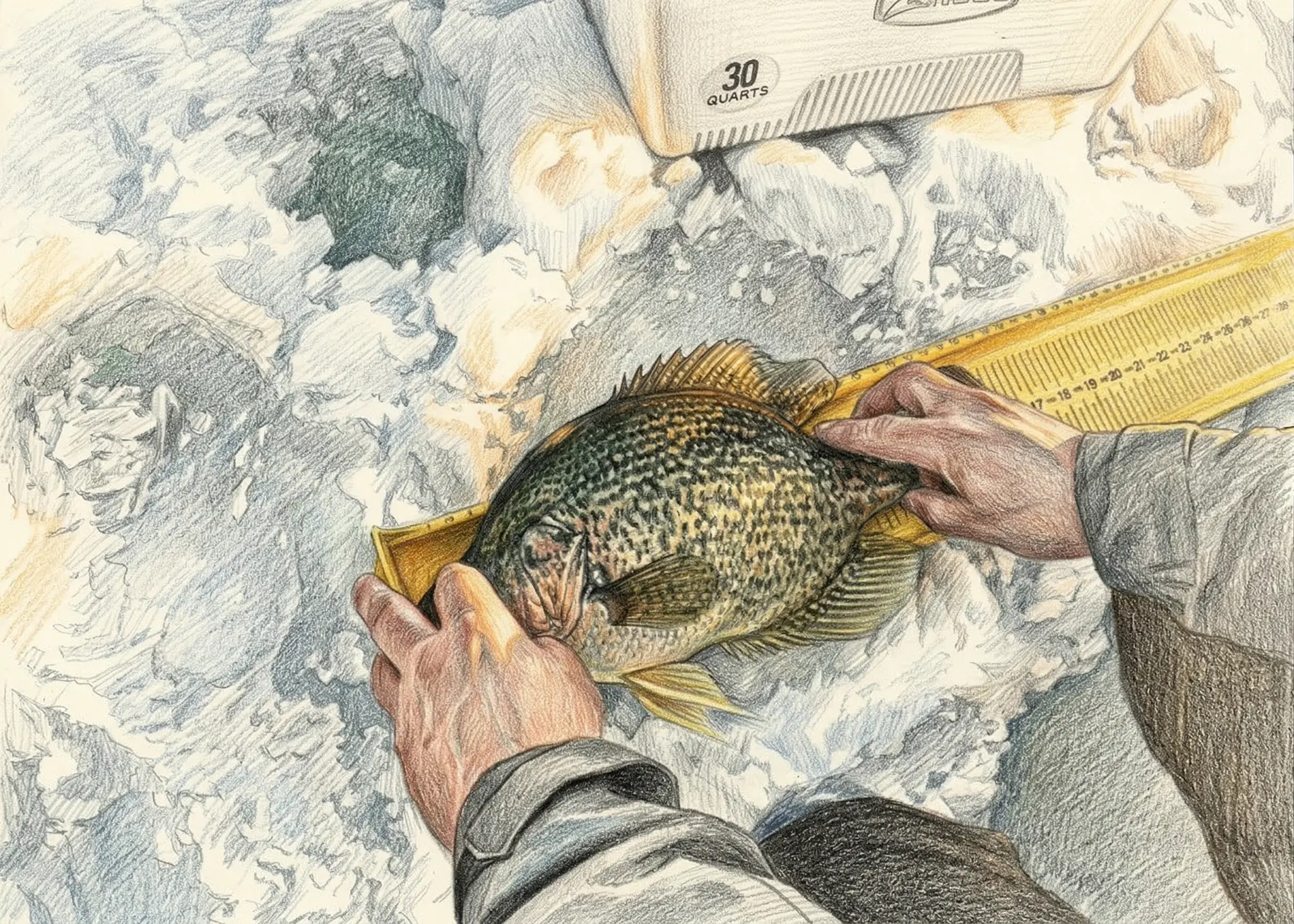
Black Crappie (Pomoxis nigromaculatus) at Hermon Pond and McGrath Pond carry no size or bag limit — they're an invasive species in Maine. Harvest as many as you want. Taking fish here is good fisheries management.
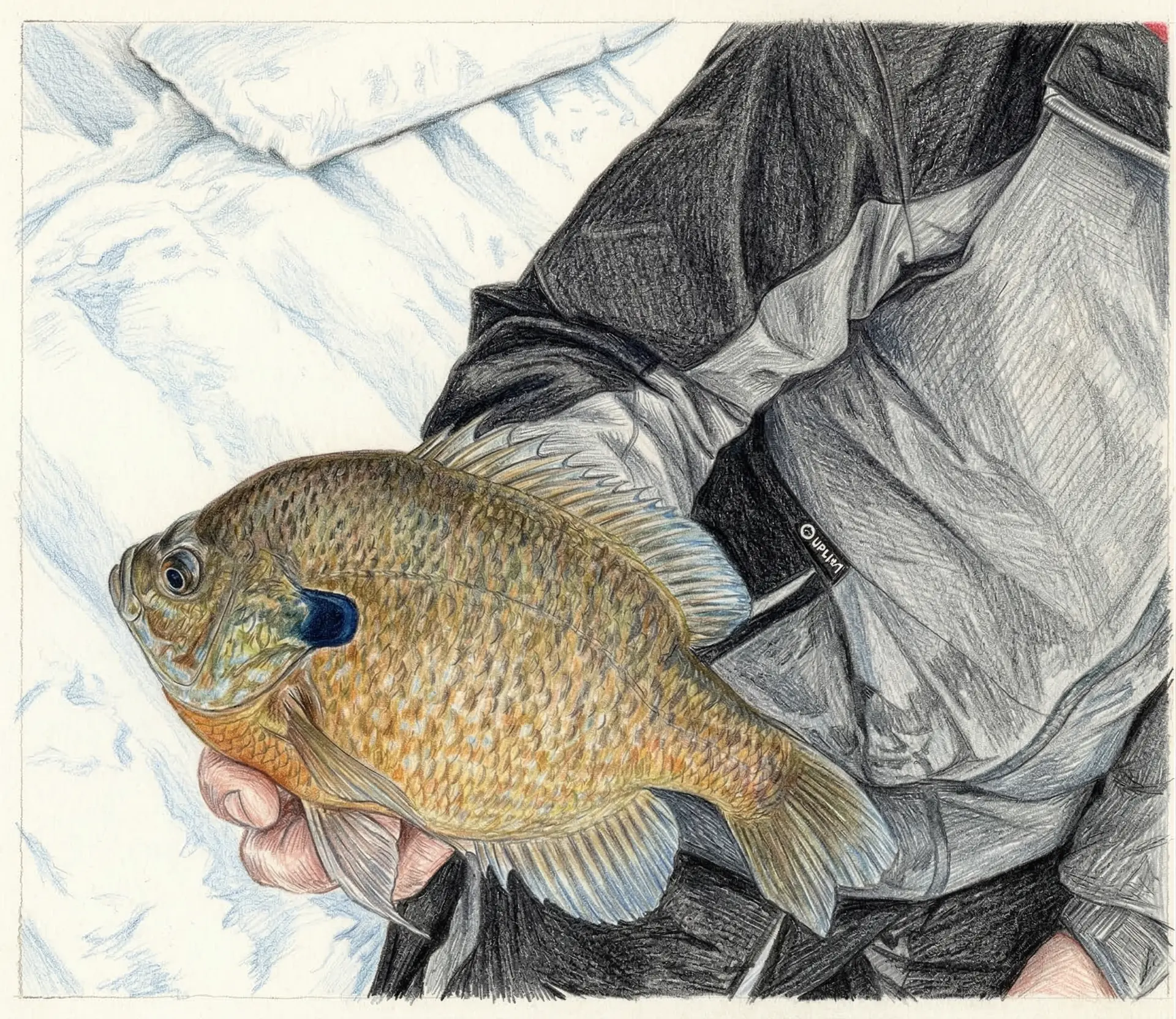
Target weedy coves, shallow flats, and depth transitions from 5 to 15 feet. That's where perch, pickerel, and panfish stage in late winter. A small jig tipped with a waxworm or a live minnow just above the bottom is all you need. For more presentation ideas, see our Maine ice fishing tips and tactics.
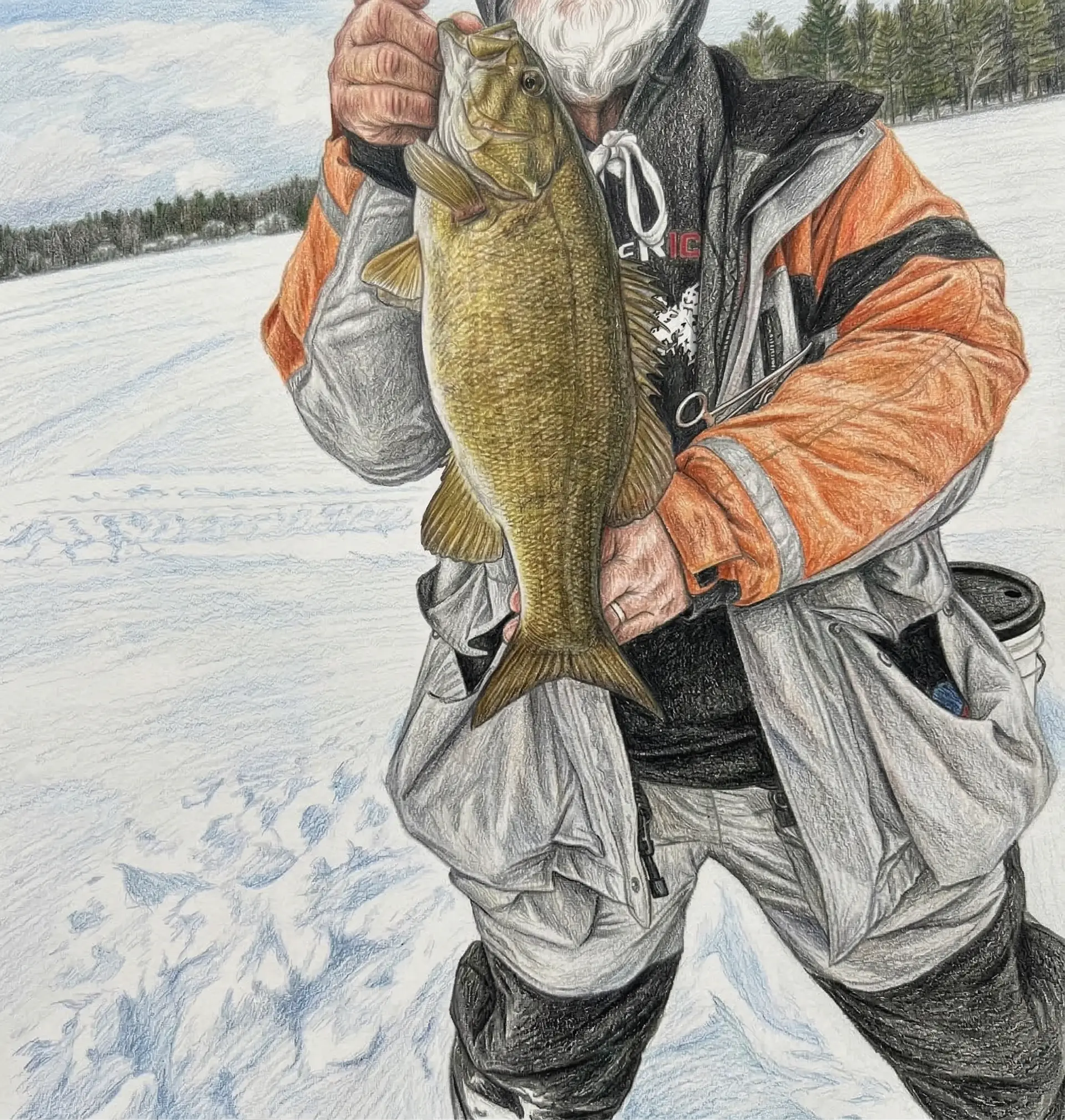
Why Is March the Best Month to Ice Fish for Bass in Maine?
Pre-spawn biology is your edge. As water temperatures begin creeping upward — even slightly — both largemouth (Micropterus salmoides) and smallmouth (Micropterus dolomieu) shift from conservation mode into active feeding. Their metabolism is building toward the spawn, their aggression is up, and the lethargic mid-winter bass that ignored your jig in January is now a different animal.
- Largemouth: Work 10–20 feet near vegetation. Winter-killed weed beds still hold baitfish, and largemouth know exactly where those baitfish are. Drop directly over the edge of any visible weed structure and work vertically.
- Smallmouth: Target rocky habitat at approximately 20 feet. Smallmouth relate to hard structure year-round; in March they're beginning to migrate shallower, but rock piles and boulder fields at this depth are reliable staging areas.
Jigging is the right call for both. A 1/4 oz blade bait or jigging spoon — short sharp snaps, dead pause, repeat — pulls reaction strikes from bass that no finesse presentation will match. Bass aren't subtle biters. When they commit, you'll feel it in your elbow. This is why they're the right species for first-time ice anglers, and frankly, for experienced ones who've had enough of staring at a sonar screen waiting for togue to make a decision.
Is March Ice Still Safe for Fishing in Central Maine?
The bite is on. That does not mean the ice is. Warm days thin ice from the top down and from the edges in — faster than most people expect, and with no visual warning until it's too late.
Watch for:
- Rock piles and points — absorb heat, create thin spots in a radius around them
- Inlets and outlets — flowing water is always working against the ice; these areas open first
- Standing water on top of the ice — a sign of structural stress, not just surface melt
Spring is close. If the ice gets sketchy in late March, patience costs you nothing. The same waters will be open and productive in a few weeks. There's no fishing report worth writing from the bottom of one.
Book a Guided Trip on Sebago Lake
When hard water gives way to open water, Sebago Lake delivers some of the best landlocked salmon and lake trout fishing in the Northeast. We run guided trips targeting both species, with local knowledge built from years on the water.
Call (207) 321-9899 or visit SebagoLakeGuide.com to book. Ice-out is coming — and so is the best trolling of the year.
Read our latest Maine fishing reports to stay current on what's happening across the region.
Keep Reading
- arrow_forwardMaine ice fishing tips and tactics
- arrow_forwardLatest Maine fishing reports
Never miss a catch!
Explore fishing reports and practical tips from Sebago Lake and across Maine.